

31 October 2026
Golu Dolls (Kolu Bommai): A Complete Guide to Navaratri Display Dolls
What are Golu dolls (Kolu Bommai)? A complete guide to Navaratri display dolls — their names across India, the main types, how to arrange the golu steps, and our ceramic Golu dolls you can buy online.
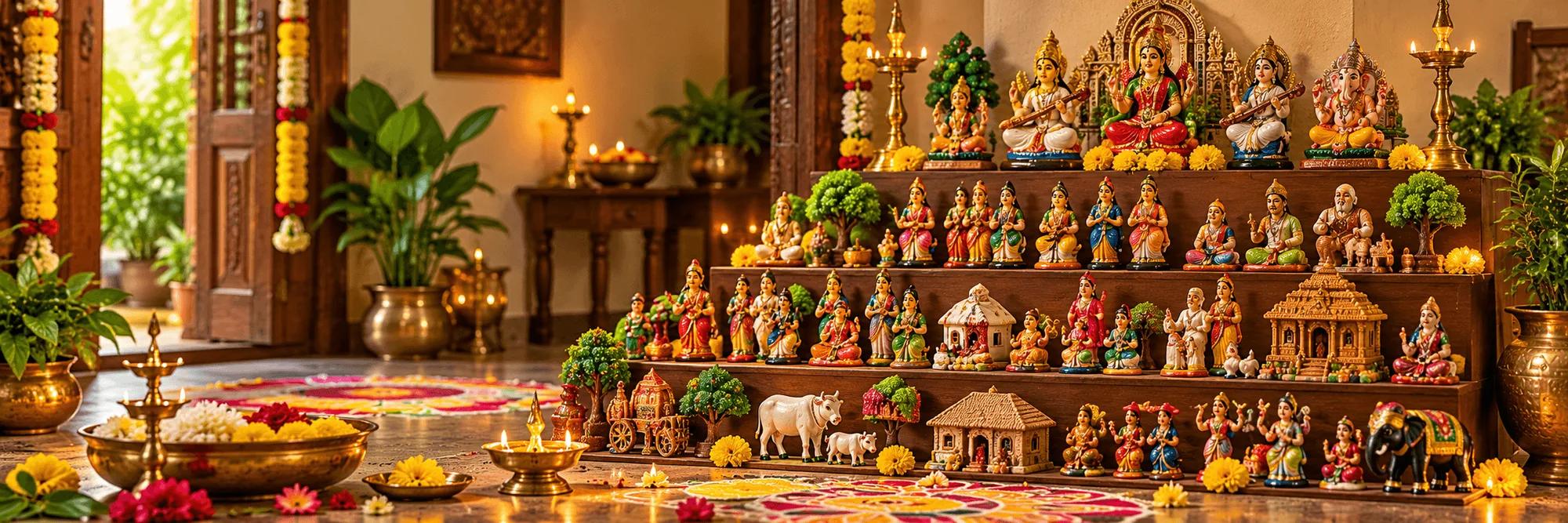
Every year during Navaratri, homes across India fill shelves with rows of colourful dolls — gods, kings, animals, tiny shops and whole miniature worlds. Navaratri is celebrated the length and breadth of the country, and this joyful display of dolls is one of its most-loved traditions. At Jaadi Kadai we offer ceramic Golu dolls you can start or grow your collection with, delivered across India. First, here's what they are, what they're called in your state, and how to set up your own Golu.
What are Golu dolls?
Golu dolls are decorative figures displayed on tiered steps during Navaratri (and Dussehra). The arrangement tells stories from mythology, shows scenes of everyday life, and is a centuries-old tradition passed from one generation to the next. Families set up odd-numbered steps (3, 5, 7, 9 or 11), arrange the dolls from gods at the top to everyday scenes at the bottom, and invite friends and neighbours to visit.
Golu dolls come in clay, terracotta, ceramic, papier-mâché and wood. Ceramic dolls — like the ones we offer — are a favourite because they have a smooth painted finish, feel sturdy, and last for years with a little care.
What are Golu dolls called across India?
The same tradition — and the same dolls — go by different names depending on where you live. This is one reason shopping online can be confusing:
- Tamil Nadu: Golu, Kolu, Bommai Golu, Kolu Bommai, Golu Bommai, Golu Pandigai. Bommai means doll in Tamil.
- Karnataka: Gombe Habba or Bombe Habba, meaning "doll festival" in Kannada. The dolls are called Gombe or Bombe.
- Andhra Pradesh & Telangana: Bommala Koluvu, which translates to "court of dolls" in Telugu. The dolls are called Bommalu.
- Across the rest of India: Navratri dolls, Dussehra dolls or Dasara dolls.
So whether you search for kolu bommai, golu bommai, gombe, or bommala koluvu, you're looking for the same thing — traditional Navaratri display dolls.
The main types of Golu dolls
A Golu collection is built up over the years. Some of the most loved pieces:
- Marapachi Bommai — the classic wooden bride-and-groom pair, traditionally gifted to a daughter at her wedding to begin her own Golu. Also called Pattada Gombe in Karnataka.
- God and goddess sets — Lakshmi, Saraswati, Durga, Krishna, Venkateswara (Perumal), Shiva-Parvathi, and the Dashavatar.
- Chettiar Bommai — the merchant couple with their shop, a Golu favourite.
- Theme sets — village scenes, weddings, Dasavatharam, Ashtalakshmi, musicians and dancers, even tiny railway stations and markets.
- Animals and birds — elephants, cows, peacocks and more for the lower steps.
How to arrange the Golu steps (padi)
Setting up a Golu is simple once you know the order:
- Build odd-numbered steps — 3, 5, 7, 9 or 11, covered with a clean cloth.
- Top steps: gods and goddesses.
- Middle steps: saints, kings, dancers and festival scenes.
- Bottom steps: everyday life — shops, villages, animals and the Chettiar couple.
- Place the Marapachi dolls and a kalasam as the centre of the display.
There's no single "correct" way — every family develops its own style over the years.
Starting (and growing) your own collection
If you're beginning a Golu, start small and add a few pieces each year:
- Begin with a Marapachi pair and a main god/goddess set.
- Add a theme set (like a village or wedding scene) the next year.
- Build outward with animals, birds and smaller figures over time.
Half the joy of Golu is watching the collection grow across generations.
How to care for ceramic Golu dolls
With a little care, ceramic Golu dolls last for decades:
- Wrap each doll in soft paper or cloth before storing.
- Pack in sturdy boxes, heavier pieces at the bottom.
- Keep in a dry place — away from damp and direct sun.
- Dust gently with a soft, dry brush before each Navaratri; avoid water on painted surfaces.
How to buy Golu dolls online
You no longer need to visit a doll market in person. You can buy ceramic Golu dolls, sets and Marapachi pairlivered to your door anywhere in India. When buying online, look for:
- Clear photos and sizes so you know exactly what you're getting.
- Careful, protective packaging (these are delicate).
- Secure prepaid checkout and reliable nationwide delivery.
Frequently asked questions
What is the difference between Golu and Kolu? None — they're two spellings of the same Tamil word for the Navaratri doll display. Golu and Kolu mean the same thing.
What are Golu dolls called in Telugu and Kannada? In Telugu the tradition is Bommala Koluvu and the dolls are Bommalu. In Kannada it's Gombe Habba and tBombe*.
Why are Golu steps always an odd number? Tradition favours odd numbers — 3, 5, 7, 9 or 11 steps — which are considered auspicious.
What is a Marapachi doll? A traditional wooden bride-and-groom pair, often the first dolls in a new Golu collection, gifted to a bride
Whatever you call them — Golu bommai, kolu bommai, gombe or bommala koluvu — these dolls bring a home alive ted across India. Browse our ceramic Golu dolls to start or grow your collection thisyear, with prepaid checkout and delivery across India.